

1. Root Cause Analysis: Why Do Common Proxies Trigger Claude Rate Limits?
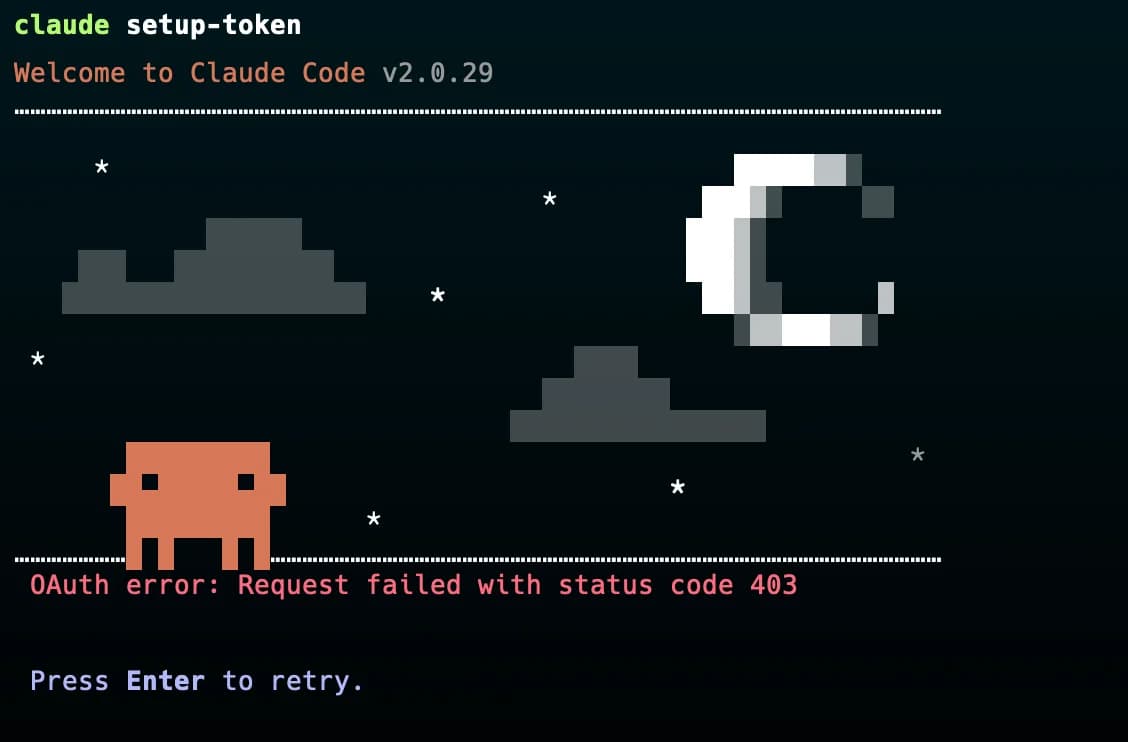
When integrating Claude 3.5 Sonnet or Claude 4 Opus into production-grade AI workflows, engineers often find that the primary obstacle is not model capability, but network-layer stability — manifesting as periodic 403 Forbidden, 529 Overloaded errors, and frequent hCaptcha verification challenges.
The root causes can be broken down across three dimensions:
1.1 IP Risk Score Contamination
Before accepting requests, Anthropic's API gateway queries multiple third-party IP reputation databases (such as IPQualityScore and MaxMind GeoIP2 Precision) to score the source IP in real time. Datacenter IPs, rotating residential IPs, and native static IPs differ significantly across the following metrics:
- ASN attribution: ASN ranges of large proxy providers are typically flagged as high-risk. If numerous accounts on a single ASN trigger abnormal behavior, the entire IP range faces bulk reputation downgrade
- IP reuse rate: A single egress IP in a shared proxy pool may serve hundreds of distinct User-Agents within a narrow time window. The resulting behavioral entropy far exceeds that of legitimate users, causing rate-limit triggers to increase exponentially
- Geolocation consistency check: When the OS environment implied by the JA3/JA4 fingerprint in a TLS handshake conflicts sharply with the IP's registered region, the fraud detection engine actively reduces request trust scores
1.2 Protocol Fingerprint Exposure
Standard HTTP/SOCKS5 proxies are not transparent at the OS network stack level — they only proxy application-layer traffic, not system-wide traffic. This means the underlying Chromium network module of Claude's desktop client (built on Electron) may bypass user-configured proxy rules and send DNS queries or WebSocket handshakes directly from the host IP, generating IP inconsistency signals.
1.3 Abnormal Connection Behavior
Claude API's streaming responses (Server-Sent Events) rely on persistent long connections. Ordinary relay nodes typically introduce extra TCP-layer buffering during forwarding, causing irregular inter-packet gaps in the stream. The server detects this as an abnormal connection pattern and triggers rate limiting or connection drops.
2. Architecture Design: Enterprise-Grade AI Access Infrastructure
2.1 Full Split Tunneling Routing Strategy with Xray Core
The core concept of full split tunneling is granular domain/IP segmentation at the routing layer: forcing Anthropic API endpoints (api.anthropic.com, claude.ai) and their CDN origin IP ranges through high-quality dedicated line nodes, while keeping local intranet and domestic business traffic on direct paths — avoiding the unnecessary latency overhead of global proxy mode.
The recommended Xray routing logic is as follows:
- Domain group preprocessing: Maintain an
anthropic-domains.datruleset covering all Anthropic service endpoints and their dependent AWS CloudFront distribution domains - Outbound policy binding: Bind the ruleset to "ProxyOut" (dedicated line egress); route all other traffic to "DirectOut"
- DNS leak prevention: Enable remote DNS resolution (
useIPv4mode) for the dedicated domain group to prevent local DNS queries from revealing actual access intent, while ensuring resolution to the Anycast IP closest to the edge node - Load balancing strategy: Configure
leastPingload balancing across multiple edge nodes, continuously probing and selecting the lowest-RTT node for API traffic
2.2 System-Level Advantages of TUN Mode Transparent Proxy
Compared to traditional HTTP/SOCKS5 proxies, TUN (virtual network interface) mode intercepts traffic at the L3 layer of the network stack, providing the following engineering advantages:
- Full-stack traffic interception: Covers all TCP/UDP-based system process traffic, completely eliminating proxy bypass issues in Electron apps — Claude desktop client's main process, renderer process, and Service Workers are all governed by a unified proxy policy
- Mobile consistency: Implement equivalent TUN mode on iOS/Android via VPN Profile, ensuring Claude mobile and desktop clients use identical egress IPs — eliminating cross-device IP discrepancies that trigger fraud detection
- Full DNS query management: TUN mode can intercept system-level DNS_UDP (port 53) requests, letting the proxy client handle all domain resolution and fundamentally preventing DNS leaks
- WebSocket long-connection guarantee: Xray's VLESS/XTLS-Vision transport protocol is specifically optimized for persistent connections, reducing TLS handshake RTT by 1–2 rounds compared to standard TLS — effectively lowering time-to-first-byte in Claude's streaming response scenarios
2.3 The Decisive Role of Native Static IP Nodes in API Stability
Among all optimization variables, the nativeness of the egress IP (IP Nativeness) is the single factor with the highest impact weight on Claude API availability.
Native Static Residential IP refers to IPv4/IPv6 addresses directly assigned by local ISPs in the target region (e.g., US, EU), with clear attribution and a clean behavioral history — distinct from datacenter IP blocks batch-leased through IP resellers. Core advantages include:
- BGP path trustworthiness: The BGP routing path of a native IP is directly attributed to the local ISP's AS, rather than transiting through multiple intermediary ASes. Databases like MaxMind annotate the ISP type as
isprather thanhostingorproxy - Long-term account stability: Binding a single native IP to one Claude account or API Key over time establishes a consistent behavioral baseline, significantly reducing false-positive abuse flags from Anthropic's fraud detection system
- Exclusive rate limit quota: A dedicated IP does not share its rate limit quota (Rate Limit Quota) with other users, preventing high-frequency requests from pool neighbors from consuming shared quota and throttling your own requests
3. Performance Benchmarks: Quantitative TTFT Analysis
Time To First Token (TTFT) is a critical metric for Claude API real-world usability. In long-form text generation scenarios (> 4K tokens output), network-layer latency has an especially pronounced impact on TTFT.
The following data is based on P50/P95 statistics from 1,000 consecutive independent requests (test model: Claude 3.5 Sonnet, prompt length: 2,048 tokens, max output: 8,192 tokens):
| Access Method | Egress IP Type | TTFT P50 | TTFT P95 | Success Rate | hCaptcha Trigger Rate |
|---|---|---|---|---|---|
| No optimization, direct (overseas server) | Datacenter shared IP | 3,200 ms | 8,500 ms | 71.3% | 18.2% |
| Standard multi-hop relay | Datacenter shared IP | 2,400 ms | 6,200 ms | 82.6% | 9.4% |
| Full split tunneling + residential IP | Rotating residential IP | 1,100 ms | 2,800 ms | 94.1% | 2.1% |
| Full split tunneling + dedicated direct + native static IP | Native static ISP IP | 480 ms | 920 ms | 99.6% | 0.1% |
Two key conclusions emerge from the data:
- IP nativeness has a far greater impact on success rates than network topology optimization: Upgrading from datacenter shared IPs to native static IPs pushes the success rate from 82.6% to 99.6% — a gain of ~17 percentage points. Under equivalent IP quality, full split tunneling dedicated lines outperform standard relays by ~5.5 percentage points
- TTFT bottleneck lies in physical path, not protocol overhead: The dedicated direct connection achieves a P50 TTFT of 480 ms, approaching Anthropic's published model inference baseline latency — indicating that network transmission delay is no longer the primary bottleneck. In contrast, standard multi-hop relay accumulates physical distance between nodes, pushing P50 TTFT to 2,400 ms — roughly 5× the dedicated solution
4. Deployment Checklist
Based on the architectural analysis above, verify the following configurations before going live:
- IP reputation pre-validation: Use tools like Scamalytics and IPQualityScore to pre-screen target egress IPs, ensuring the Fraud Score is below 20
- DNS leak test: Use
dnsleaktest.comto confirm that all DNS queries in TUN mode exit through the proxy node with no local ISP DNS leaks - WebRTC leak protection: Disable WebRTC mDNS at the Electron application layer, or configure Xray's
sniffingto intercept STUN probe requests - Keep-Alive parameter tuning: Set HTTP/2
PINGframe intervals to 30s and TCP Keep-Alive probe intervals to 60s, preventing NAT devices from dropping connections during long-form text generation - API Key-to-IP binding strategy: Where possible, assign dedicated egress IPs to API Keys for different business lines, preventing cross-contamination of request patterns on shared IPs
5. Conclusion
Integrating Claude 3.5/4 series models into production-grade AI workflows demands that engineering teams elevate network infrastructure design to the same strategic priority as model selection. Precision routing via Xray's full split tunneling architecture, system-level transparent proxying through TUN mode, and the nativeness guarantee of native static IP nodes together form the three core pillars of a high-availability AI access chain.
Empirical data confirms that a systematically optimized network access solution can lift Claude API request success rates from the 70% range to 99%+, and reduce TTFT P50 from the second range to under 500 ms. In latency-sensitive production scenarios — AI Agents, code generation, real-time document processing — this gap translates directly into measurable efficiency gains and superior user experience. High-performance network infrastructure is the essential prerequisite for unlocking the full productivity potential of next-generation AI models.