1. Why Does a Free VPN Work at First but Become Increasingly Unstable?
This is a situation many users encounter:
-
It connects fine the first time
-
After a few days, speed drops noticeably
-
Eventually, it can't access target websites at all
The root cause usually isn't a "network issue" — it's that the IP addresses have been exhausted.
2. How Do Free VPN IPs Get "Burned Out"?
Massive Reuse of the Same IPs
One key characteristic of free VPNs is:
-
Small IP pool
-
Massive user base
-
High-frequency reuse
When a single IP is used by a large number of users in a short period, it quickly gets flagged by overseas websites as an abnormal traffic source.
IPs Already Flagged as Risky Across Multiple Platforms
When you search for "free VPN blocked", the issue usually isn't caused by your personal behavior. Instead:
-
The IP was previously used for mass account registrations
-
The IP was used for web scraping or suspicious requests
-
The IP has already been blacklisted by platforms
You simply "inherited a problematic IP."
3. In Which Scenarios Do Free VPNs Fail Most Often?
Based on real user feedback, the following scenarios demand higher IP quality:
-
Logging into overseas accounts
-
Using AI tools
-
Accessing e-commerce dashboards
-
Running advertising campaigns
In these scenarios, free VPNs have a significantly higher failure rate compared to regular browsing.
4. Why Are More Users Searching for "Residential IP VPN"?
When users start searching for:
-
What is a residential IP VPN
-
Difference between residential IP and data center IP
-
Is a static IP VPN more secure
It usually signals one thing:
👉 Free VPNs can no longer meet their needs.
The key advantages of residential IPs are:
-
They closely resemble real user networks
-
Lower risk scores from fraud detection systems
-
Greater long-term stability
5. How Does the Experience Differ Between Free and Reliable VPNs?
From a user experience perspective, the main differences are:
| User Experience | Free VPN | Reliable VPN |
|---|
| Connection success rate | Highly variable | Stable |
| Access speed | Noticeably slower during peak hours | Consistently usable |
| Login verification | Frequent | Rare |
| Session continuity | Prone to disconnection | Reliable over time |
This is exactly why more and more users are looking for "alternatives to free VPNs."
6. Where TongbaoVPN Fits in Real-World Usage
After comparing free VPNs, some users choose TongbaoVPN — not because it's feature-packed, but because:
-
It provides IPs that closely mimic real network environments
-
It reduces abnormal verification prompts and access failures
-
It's better suited for long-term, repeated use
It's not designed for "quick fixes" — it serves as a reliable networking foundation.
7. Who Should Stop Using Free VPNs?
If any of the following applies to you:
-
You need frequent access to overseas websites
-
You're tired of constant verification prompts and login failures
-
You need to operate the same account over extended periods
Then sticking with a free VPN will likely only cost you more time in the long run.
The Bottom Line: What's the Real Cost of a Free VPN?
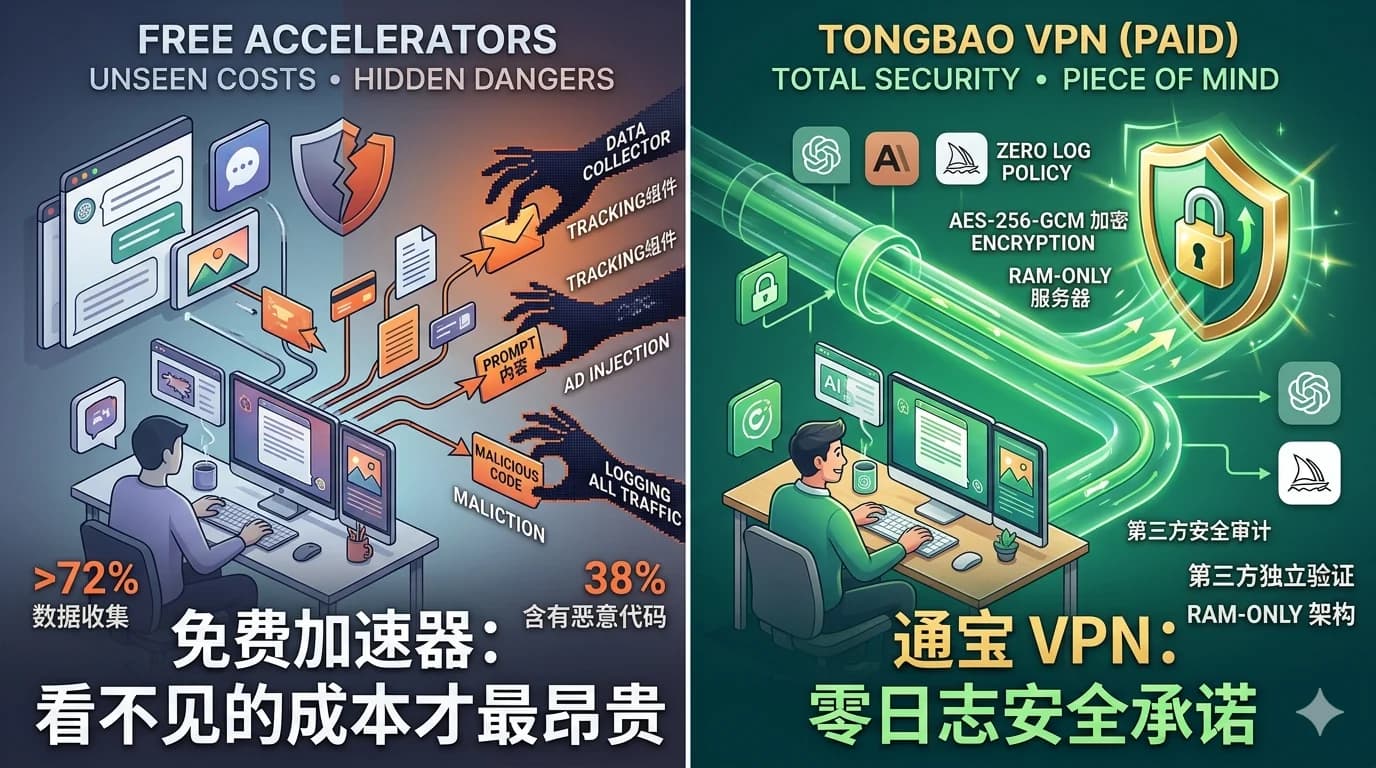
The biggest problem with free VPNs isn't the "free" part — it's:
When your needs evolve from "occasional browsing" to "consistent, reliable access," choosing a more dependable solution like TongbaoVPN is ultimately about reducing problems, not increasing expenses.
TongbaoVPN — Steady connections to the world, lasting empowerment for the future.
Download TongbaoVPN: https://www.tongbaovpn.com/